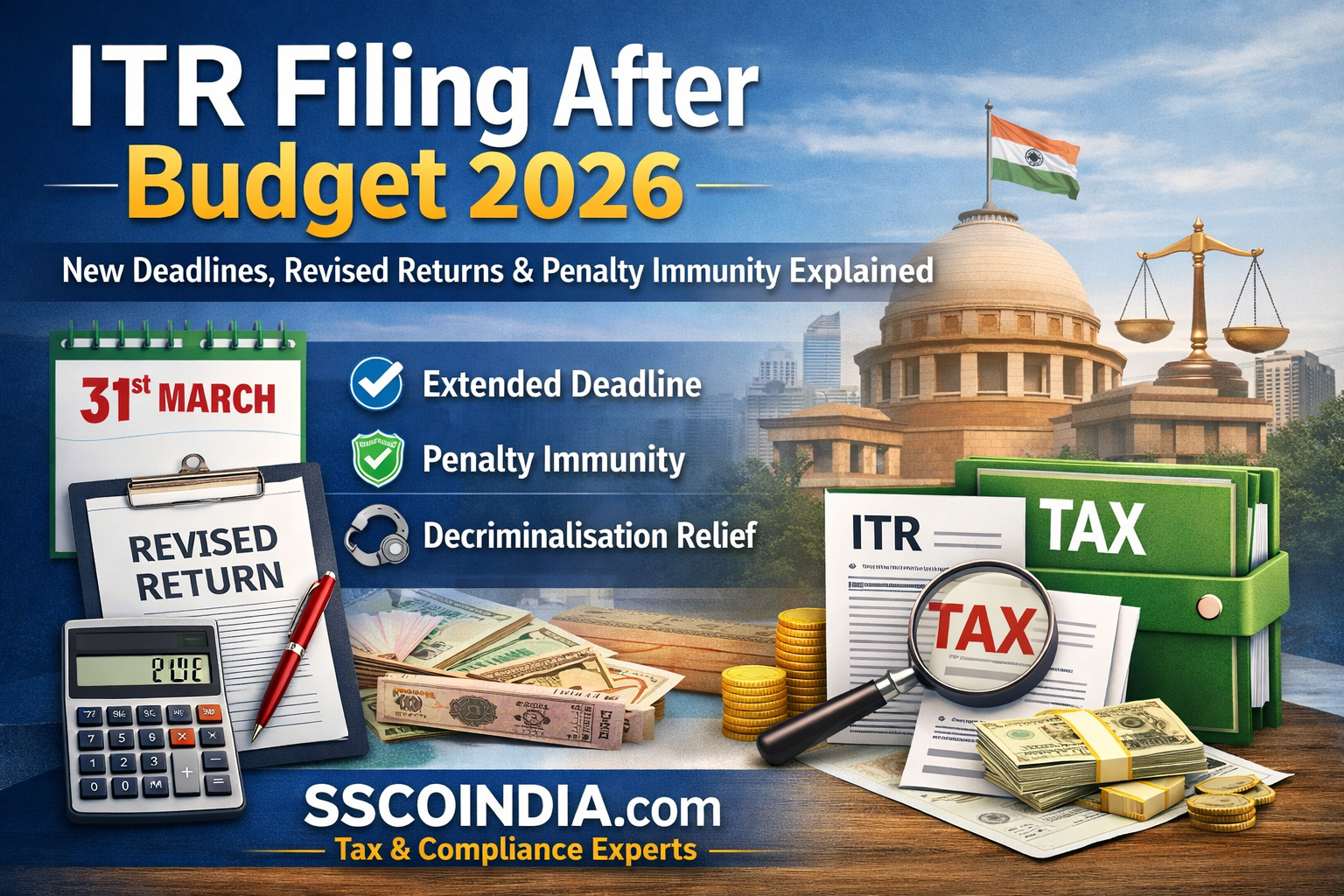
Why Budget 2026 Is a Big Relief for ITR Filers
The Union Budget 2026 has brought a much-needed wave of relief for individual taxpayers, especially salaried employees and small business owners who often struggle with complex income tax rules, strict deadlines, and fear of penalties. Instead of introducing harsher compliance measures, Budget 2026 focuses on simplification, flexibility, and trust-based taxation, making ITR filing after Budget 2026 far less stressful than before.
One of the most significant shifts in this budget is the government’s clear intent to support honest taxpayers. The Finance Minister has acknowledged that many ITR errors happen not because of tax evasion, but due to lack of clarity, last-minute filing, or mismatches in TDS and income data. As a result, Budget 2026 introduces reforms that allow taxpayers to correct mistakes without fear, encouraging voluntary and accurate tax compliance.
Salaried individuals with multiple income sources—such as salary, interest income, capital gains, or freelance income—must now recheck their ITR strategy. Similarly, small businesses, professionals, and freelancers need to reassess how they file returns, maintain records, and respond to tax notices. The budget has changed not just timelines, but also the risk framework associated with income tax filings.
Key highlights include:
-
Extended revised return deadlines
-
Immunity from penalty and prosecution for eligible cases
-
Decriminalisation of non-production of books of account
Together, these measures mean that missing or incorrect ITR filing is now easier to fix than ever before. However, while the rules are more relaxed, correct interpretation and timely action remain critical. This is where professional guidance from experienced tax advisors like SSCOIndia becomes invaluable for ensuring compliance while fully utilising Budget 2026 benefits.
Overview of Key Income Tax Changes Introduced in Budget 2026
Budget 2026 adopts a compliance-friendly and taxpayer-centric approach, marking a decisive move away from aggressive enforcement toward cooperative governance. The government has clearly signalled that its priority is to reduce litigation, minimise fear, and improve ease of doing business and living.
A major theme running through the income tax proposals is trust-based governance. Instead of assuming every discrepancy is intentional, the new framework differentiates between genuine mistakes and deliberate misreporting. This is a crucial shift that directly benefits salaried taxpayers and MSMEs who often face notices for minor errors.
Some of the most impactful income tax changes include:
-
Extension of timelines for revising returns
-
Allowing updated returns even after certain proceedings
-
Automated, rule-based systems for lower or nil TDS certificates
-
Decriminalisation of procedural lapses
-
Expanded immunity provisions for under-reporting
By reducing the threat of prosecution and penalties, the budget aims to lower unnecessary tax disputes that clog the system and burden taxpayers. For honest individuals, this means fewer notices, faster resolutions, and greater confidence in filing returns correctly.
However, these reforms also require careful application. Misunderstanding eligibility conditions or incorrectly claiming immunity can still trigger scrutiny. This is why working with professionals such as SSCOIndia ensures that taxpayers benefit from reforms without exposing themselves to future compliance risks.
Revised ITR Filing Deadline Extended Till 31st March
One of the most searched and discussed changes under Budget 2026 is the revised return deadline extended till 31st March. Earlier, taxpayers had a much shorter window to correct errors in their filed returns. Missing this deadline often resulted in penalties, loss of deductions, or prolonged litigation.
Old vs New Revised Return Timelines
-
Earlier system: Limited time to revise returns, often leading to rushed corrections
-
After Budget 2026: Revised returns can now be filed up to 31st March, giving taxpayers additional months to review, correct, and regularise their filings
Who Benefits the Most?
-
Salaried employees who discover income mismatches later
-
Small businesses finalising accounts after initial filing
-
Freelancers and professionals with fluctuating income
-
Taxpayers affected by delayed Form 16 or Form 26AS updates
When Does a Revised Return Become Necessary?
A revised return may be required in cases such as:
-
Missed income (interest, rent, freelance receipts)
-
Wrong deductions claimed under sections like 80C, 80D, or HRA
-
Incorrect TDS details leading to mismatch with AIS or 26AS
Practical Examples
A salaried employee may later realise that interest income from savings or fixed deposits was not included. Similarly, a trader might correct turnover figures after finalising books. Under the new regime, such taxpayers now have sufficient time to revise returns safely—provided the revision is done correctly.
SSCOIndia assists taxpayers in identifying whether a revision is required, computing correct tax liability, and filing revised returns well before the extended deadline to avoid last-minute issues.
Immunity from Penalty and Prosecution: What It Really Means
Another high-impact reform is income tax penalty immunity, which has significantly reduced fear among taxpayers. To understand this benefit, it is important to distinguish between penalty and prosecution.
-
Penalty refers to monetary fines imposed for incorrect reporting
-
Prosecution involves criminal proceedings, which can be stressful and damaging
New Immunity Framework
Budget 2026 introduces a structured framework where taxpayers who under-report income unintentionally and voluntarily correct it can receive immunity from penalty and prosecution.
Under-Reporting vs Misreporting
-
Under-reporting: Genuine errors, omissions, or interpretation issues
-
Misreporting: Deliberate concealment or false reporting
Immunity is available for under-reporting but not for misreporting, making professional evaluation critical.
Why This Reduces Risk for Genuine Taxpayers
Honest taxpayers can now correct mistakes without fear of harsh consequences. This encourages transparency and reduces prolonged disputes with the income tax department.
SSCOIndia helps taxpayers assess eligibility for immunity, prepare accurate disclosures, and handle communication with tax authorities—ensuring peace of mind and full compliance.
Need help with ITR filing, revised returns, or penalty-free compliance after Budget 2026?
Choose SSCOIndia for expert-led ITR filing, revision, and tax advisory services—trusted by salaried individuals, professionals, and businesses across India.
Decriminalisation of Non-Production of Books of Account: What Has Really Changed
One of the most reassuring changes introduced in Budget 2026 is the decriminalisation of non-production of books of account. For years, this provision caused anxiety among small taxpayers who feared criminal consequences even for procedural lapses. Budget 2026 corrects this imbalance by removing criminal liability for genuine non-compliance cases.
What Was Considered an Offence Earlier
Before Budget 2026, failure to produce books of account or supporting documents during assessment or scrutiny proceedings could expose taxpayers to prosecution, not just monetary penalties. This was especially harsh for small businesses and professionals who may not have had formal accounting systems or faced record gaps due to operational challenges.
Even honest taxpayers faced legal uncertainty when documents were misplaced, delayed, or incomplete—leading to prolonged disputes and fear-driven compliance.
What Has Been Decriminalised After Budget 2026
Under the new framework, non-production of books of account is no longer treated as a criminal offence. While tax authorities can still seek explanations, impose monetary penalties, or make additions where required, criminal prosecution has been removed for such procedural failures.
This reform reflects the government’s move towards trust-based governance, acknowledging that compliance failures are not always intentional.
Impact on Different Taxpayer Groups
Small Businesses
Small traders and MSMEs often rely on basic accounting systems. Decriminalisation gives them breathing space to regularise records without fear of criminal action.
Professionals (Doctors, Lawyers, CAs, Consultants)
Professionals managing multiple clients and receipts benefit from reduced litigation risk, especially where documentation gaps are minor or technical.
Freelancers & Gig Workers
Freelancers with irregular income streams can now focus on correcting returns instead of fearing prosecution due to missing invoices or delayed records.
Why Maintaining Books Still Matters
It is important to understand that decriminalisation does not mean exemption from compliance. Books of account remain essential for:
-
Accurate ITR filing
-
Claiming deductions
-
Defending assessments
-
Avoiding tax additions and penalties
Maintaining proper records protects taxpayers from unnecessary tax demands. With professional support from SSCOIndia, businesses and individuals can maintain audit-ready records while enjoying the relief provided under Budget 2026.
Who Should Take Immediate Action After Budget 2026
Budget 2026 has created opportunities, but only for taxpayers who act in time. Certain categories of taxpayers should immediately review their income tax position to avoid missing these benefits.
Salaried Employees with Multiple Income Sources
Employees earning income from salary plus interest, capital gains, rental income, or side freelancing often face mismatches in AIS and Form 26AS. Budget 2026 gives them time and protection to correct these errors—if action is taken promptly.
Small Business Owners & Traders
Businesses that filed provisional returns earlier or finalised accounts later should reassess turnover, expenses, and deductions. The extended revision window is a major advantage for this group.
Freelancers and Consultants
Freelancers dealing with multiple clients, foreign income, or inconsistent TDS deductions should revisit earlier filings to ensure accurate reporting and immunity eligibility.
Taxpayers Who Missed or Wrongly Filed ITR
If you missed filing your return or filed it incorrectly due to confusion or late documentation, Budget 2026 provides a structured way to fix mistakes without fear.
Individuals Facing Notices or Reassessment
Those who have received income tax notices or reassessment communications should act immediately. Budget 2026 allows updated compliance even in advanced stages—when handled professionally.
SSCOIndia specialises in helping such taxpayers reassess risk, revise filings, and respond to notices correctly and confidently.
Step-by-Step: What You Should Do Now for Correct ITR Filing
Budget relief is effective only when applied correctly. Here is a practical action plan every taxpayer should follow after Budget 2026.
Step 1: Review Previously Filed Returns
Start by reviewing your filed ITRs for income omissions, incorrect deductions, or classification errors.
Step 2: Match Income with AIS & Form 26AS
Compare salary, interest, capital gains, and TDS details with AIS and Form 26AS to identify mismatches—one of the most common reasons for notices.
Step 3: Identify Scope for Revision or Update
Determine whether a revised return or updated return is required based on errors identified and timeline eligibility.
Step 4: Decide Whether Professional Filing Is Required
Complex income structures, immunity claims, or notice cases should never be handled casually. Professional filing ensures accuracy and long-term safety.
Step 5: Timeline Checklist Till 31st March
-
January–February: Review & reconciliation
-
February: Decision on revision/update
-
March: Filing and confirmation
SSCOIndia provides end-to-end support—from review to final filing—ensuring compliance well before deadlines.
Common ITR Mistakes Budget 2026 Helps You Fix
Budget 2026 is designed to correct errors, not punish them. Some of the most common ITR mistakes now easier to resolve include:
Late Filing Errors
Earlier delays resulted in heavy penalties and loss of benefits. Budget 2026 offers structured correction options.
Incorrect Deductions
Wrong claims under 80C, 80D, HRA, or business expenses can now be corrected through revision.
TDS Mismatch
Differences between claimed TDS and Form 26AS are a leading cause of notices. The extended timeline helps fix this accurately.
Non-Disclosure of Income
Missed interest income, capital gains, or freelance receipts can now be disclosed safely under revised frameworks.
Fear-Based Non-Compliance
Many taxpayers avoided correction due to fear of prosecution. Budget 2026 removes this fear and promotes voluntary compliance.
Need help correcting your ITR after Budget 2026?
Choose SSCOIndia for ITR filing, revised returns, notice handling, and penalty-free compliance support—so you stay compliant, confident, and stress-free.
How These Changes Make ITR Filing Easier & Safer
Budget 2026 marks a clear shift in how the Indian tax system views compliance. Instead of focusing on punishment, the government has prioritised ease, safety, and confidence in ITR filing. For millions of taxpayers, this means filing an income tax return is no longer an exercise driven by fear but a structured, manageable process.
Reduced Legal Stress for Honest Taxpayers
Earlier, even minor mistakes—such as missing interest income or a TDS mismatch—could lead to prolonged stress, notices, or even prosecution. With the introduction of immunity provisions and decriminalisation of procedural lapses, Budget 2026 significantly reduces legal anxiety for honest taxpayers. Salaried individuals and small businesses can now correct errors without worrying about criminal consequences.
More Time for Correction
One of the biggest advantages is the extended timeline for revised and updated returns. Taxpayers now have sufficient time to:
-
Review income disclosures
-
Match AIS and Form 26AS
-
Correct deductions and exemptions
This additional time reduces rushed filings and improves overall accuracy—one of the most important factors in avoiding income tax scrutiny.
Lower Penalty Exposure
With the new income tax penalty immunity framework, genuine under-reporting can be corrected without harsh financial consequences. This is especially helpful for individuals whose income details evolve after initial filing, such as interest income updates or delayed Form 16 issuance.
Encouragement for Voluntary Compliance
Budget 2026 actively encourages taxpayers to come forward voluntarily and regularise their tax affairs. By reducing penalties, prosecution, and rigid timelines, the government has made compliance less intimidating and more cooperative. This is a win-win for both taxpayers and the tax system.
Why Professional Help Matters Even After Budget Relaxations
While Budget 2026 makes ITR filing easier, it does not eliminate compliance responsibility. Many taxpayers mistakenly assume that relaxed rules mean lower risk—but incorrect filing can still trigger notices and tax demands.
Budget Relief ≠ No Compliance
Relaxations are conditional. Immunity and decriminalisation apply only when disclosures are accurate and timely. Misinterpretation of eligibility can result in loss of protection.
Importance of Correct Interpretation
Income tax laws are technical. Determining whether an error qualifies as under-reporting or misreporting requires professional judgement. Filing the wrong type of return—revised instead of updated, or vice versa—can nullify Budget benefits.
Risk of Notices Due to Incorrect Filing
Even under Budget 2026, mismatches in:
-
TDS credits
-
Capital gains reporting
-
Business income disclosure
can lead to automated notices. Once a notice is issued, casual handling can worsen the situation.
Benefits of Expert-Assisted ITR Filing
Professional assistance ensures:
-
Correct classification of income
-
Optimal use of immunity provisions
-
Accurate tax computation
-
Proper response to notices
This is why taxpayers increasingly prefer expert-led filing instead of DIY portals—especially after major policy changes.
How SSCOIndia Can Help You
Navigating ITR filing after Budget 2026 requires both technical understanding and practical execution. This is where SSCOIndia becomes your trusted compliance partner.
ITR Filing for Salaried & Businesses
SSCOIndia provides accurate ITR filing services for:
-
Salaried employees
-
Professionals and freelancers
-
Small businesses and traders
Every return is reviewed for compliance, deductions, and mismatch risks before submission.
Revised and Updated Return Filing
Missed income? Wrong deduction? Late correction?
SSCOIndia specialises in revised and updated return filing, ensuring:
-
Correct use of extended deadlines
-
Eligibility for penalty immunity
-
Full alignment with AIS and Form 26AS
Handling Notices & Reassessment Cases
If you have received:
- Income tax notices
- Reassessment communications
- Demand intimation
SSCOIndia manages end-to-end representation—drafting replies, submitting documents, and coordinating with tax authorities.
End-to-End Tax Compliance Support
Beyond ITR filing, SSCOIndia offers:
-
Tax planning & advisory
-
Record maintenance guidance
-
Compliance reviews
-
Long-term tax risk management
This holistic approach ensures you don’t just file returns—but stay compliant year after year.
Conclusion: Don’t Miss the Opportunity Budget 2026 Gives You
Budget 2026 is a rare opportunity for taxpayers to reset, correct, and strengthen their income tax compliance without fear. With extended deadlines, immunity from penalty and prosecution, and decriminalisation of procedural lapses, the government has made it clear: honest taxpayers are partners, not offenders.
However, these benefits are time-bound and conditional. The extended window will close on 31st March, and mistakes made today can still create problems tomorrow if not handled correctly.
The smartest approach is proactive, stress-free compliance—review your returns, correct errors, and seek expert support where required.
Don’t wait till the last minute.
Act before 31st March.
Choose SSCOIndia for reliable, expert-led ITR filing and compliance services.
With the right guidance, Budget 2026 can become not just a relief—but a long-term advantage for your financial peace of mind.